


Welcome to Earl's Golf Blog
July 26, 2026
Open Champion Ryan Fox
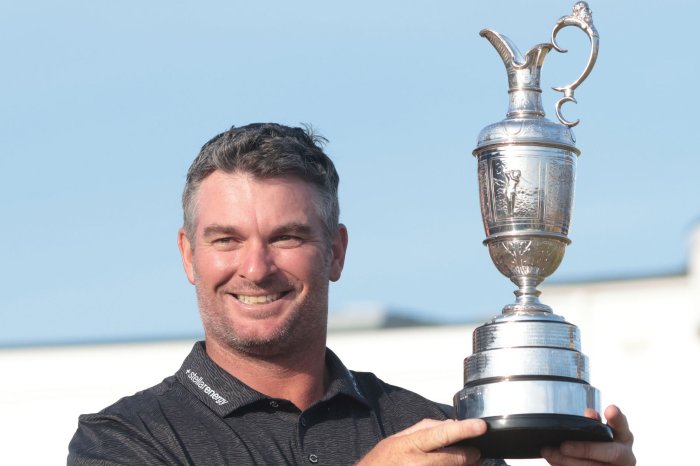 Ryan Fox won the Open Championship with a remarkable display of shotmaking, resilience, and mental toughness—one of the finest performances ever produced under the pressure of a major championship. Epic finishes like what we witnessed are reserved for Arnold Palmer, Jack Nicklaus, Tiger Woods, or Scottie Scheffler. What Ryan Fox accomplished may never receive the recognition it deserves, mainly because he is not in the superstar class. Yet his victory ranks among the greatest come-from-behind finishes in modern major championship history.
Standing on the 13th tee, after holing a must-make 10-footer for par on the previous hole, Ryan stood at 7 under par with Cameron Young in the clubhouse at 9 under par and Scottie Scheffler, Tom Kim, Sam Burns ahead of him at 8 under par. From that point on he was a freight-train that had only one purpose and that was to go all out with all he had. Birdies at 13 and 14 put him tied with Young. Scheffler and Kim had dropped back. Misfortune struck on the next hole that would cause a lesser man to lose faith. A near perfect five iron that needed to carry three feet further hit the side of the bunker wall and caromed to an unhittable position that required a pitchout sideways and a tough up-and-down for only a bogie. Playing aggressively on the next hole, Ryan split the fairway and then hit a precise iron to 10 feet, which he made to get back to 9 under. The 17th hole was his best chance to birdie if you are able to hit the fairway. Playing a driving iron, Ryan drove it 320 yards only to have it roll one foot too far into an awkward lie in the bunker that he could only advance 100 yards. The par on 17 left him tied with Cameron Young with the second most difficult hole on the course facing him.
Ryan told his caddy that we are going to win it here. This was the biggest stage of his career, in the biggest tournament in the world for many, and the enormity of the consequences for less than perfect execution. The best can rise to the top. Forget about history, forget about millions of people watching, forget the life altering ramifications that a birdie would bring. Tiger did it. Jack did it. Arnie did it. Now it's Ryan Fox's time and he was ready.
The toughest driving hole on the course and Ryan pipped it long and straight. When you are focused you see nothing but your target. Mission accomplished, that setup a full 9 iron, which again never left that pin, finished 10 feet below the pin. When it was his turn to putt, there was no deliberation, no second guessing, no viewing the putt from all angles. Time to make the putt and with no hesitation and the conviction of a winner, the putt was made and history was written.
Ryan Fox has worked his way up through the ranks and only earned his PGA card just three years ago. He has now won three times on the PGA Tour with his previous biggest win the Canadian Open last year. He is largely unknown in the US, but the touring professionals know what he is capable of. The story of this championship was one of grit, determination, and an unwavering will to win. Ryan Fox was in "the zone," embracing every challenge and thriving under the immense pressure that defines major championships. Years from now, he may look back and ask himself, "Did I really do that?"
Major championships are usually won by the player who makes the fewest mistakes and simply outlasts the field. Rarely does a champion seize the moment with the kind of bold, fearless shotmaking that Ryan Fox displayed throughout this unforgettable victory. He earned the title of Champion Golfer of the Year, and his performance deserves to be remembered as one of the finest in the long and storied history of The Open Championship.